Machine identity card
Model, serial, configuration, options, power system, consumables, attachments, and document revision references. This prevents advice for the wrong configuration.
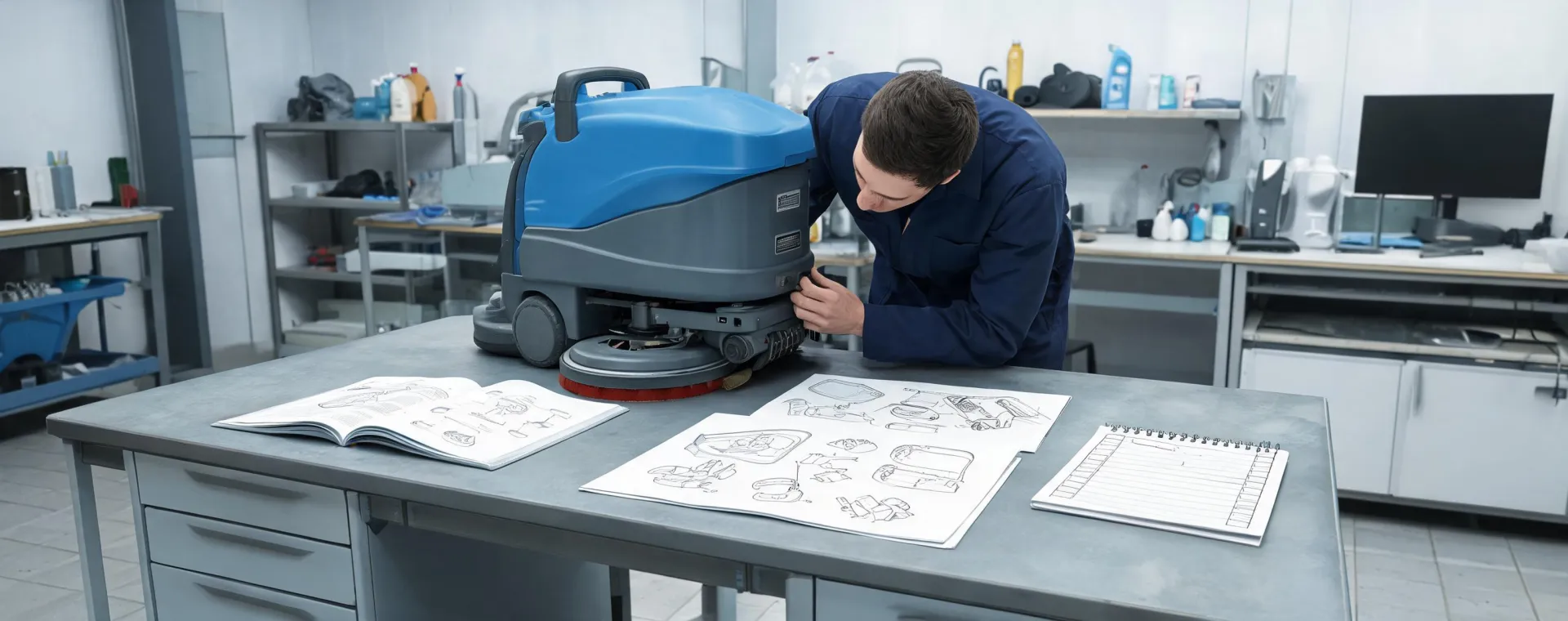
Use this roadmap to identify equipment, locate current documentation, prepare a reproducible issue record, coordinate service, and confirm the machine has returned to its defined operating condition.
Follow the Support RoadmapA support conversation moves faster when machine identity, operating conditions, observations, and prior actions are stated separately.
Record model designation, serial identifier, installed options, battery or power configuration, attachments, and the current brush, pad, squeegee, filter, or broom setup.
Retrieve the model-specific operating manual, current data sheet, safety information, parts reference, warranty terms, and applicable technical bulletins. Avoid substituting a similar model's document.
State when the symptom occurs, which route segment exposes it, what the operator sees or hears, and whether the condition changes with turns, pressure, speed, load, temperature, or component condition.
Follow only authorized checks from current documentation. Record each changed variable and result. Do not bypass guards, interlocks, site procedures, or qualified-service requirements.
Send the identity record, issue description, environment, maintenance history, observations, permitted checks, photos where appropriate, and the operational consequence to the support contact.
Document the completed action, replacement parts, configuration, test boundary, return-to-service result, operator notice, and any revised inspection or maintenance interval.
Model, serial, configuration, options, power system, consumables, attachments, and document revision references. This prevents advice for the wrong configuration.
Floor, soil, debris, slope, turns, access, operating window, water, power, storage, and operator. The symptom is tied to the conditions under which it appears.
Note the last known normal operation, first observed change, and current state. Add maintenance, component replacements, impacts, and changes in chemistry or method.
Use the same test boundary and method before and after authorized action. Compare observation, not memory, and retain the result with the machine record.
Support information on this page is organizational guidance, not a repair instruction. Stop operation when site procedure, the operating manual, a warning indicator, damaged electrical components, loss of control, abnormal heat, fluid leakage, or another unsafe condition requires it. Troubleshooting, adjustment, disassembly, electrical work, and return-to-service decisions must follow current product documentation and qualified-service requirements.
Records pre-use condition, controls, route symptoms, warnings, cleanup, and shutdown. The operator does not replace authorized diagnosis with an improvised workaround.
Confirms the route, operating method, training, site procedure, downtime consequence, and whether conditions changed. The supervisor preserves comparable test conditions.
Checks permitted service items, maintenance history, component condition, and completed actions using model-specific documentation. Work and parts are recorded against machine identity.
Receives the structured brief, identifies missing evidence, routes the request, and clarifies which next step requires product documentation, parts support, or qualified service.
These counts describe the support method, not product performance. Actual service availability, documentation, warranty coverage, parts, and response paths depend on model, serial, region, and current terms.
Include machine identity, route context, first observed change, current condition, maintenance history, authorized checks already completed, and the operational consequence.